
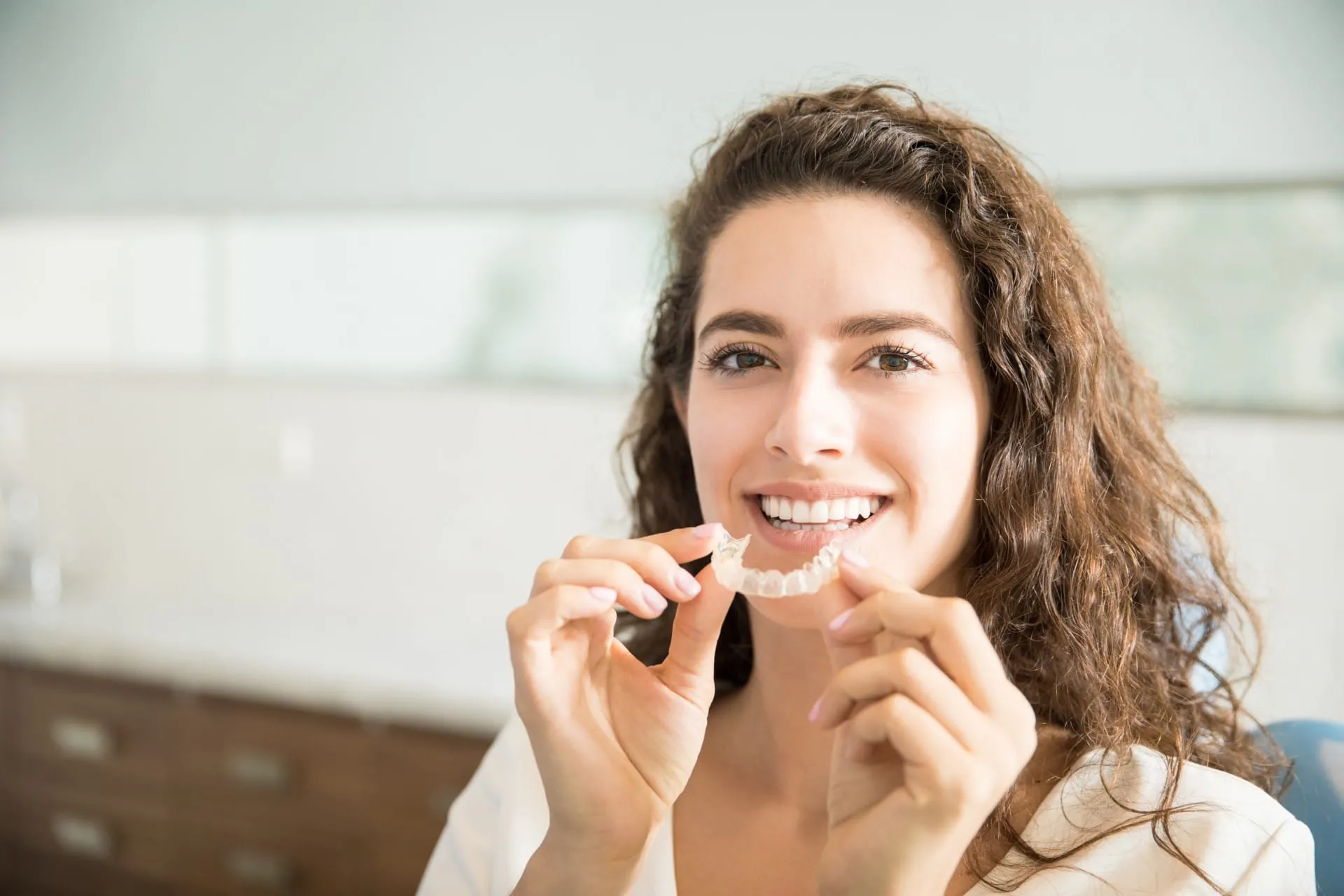
Most Invisalign treatments take 12 to 18 months, but the real answer depends on your specific case. Simple spacing or minor crowding may finish in as little as 6 months. Complex bite corrections can stretch to 24 months or more. At Caggiano Orthodontics, our team builds a plan that’s 100% customized to your specific needs.
Your treatment time comes down to a few key things: how much your teeth need to move, how consistently you wear your aligners, and how your body responds. Accelerated protocols like vPro can help shorten some plans, too.
The best way to get a true estimate is a free consult with an orthodontist. A quick scan and exam give you a personalized timeline, aligner count, and treatment plan before you get started. This first visit gives you clear numbers to work with rather than rough guesses, so you know what your smile will look like and roughly when.
What Affects How Long Invisalign Takes?
Several factors shape how long your treatment will take. No two cases are exactly alike, which is why timelines vary so much from person to person. Understanding these variables helps you set realistic expectations from day one.
Here’s what plays the biggest role:
- Case complexity. Mild alignment issues resolve much faster than severe malocclusion. A small gap between two front teeth is a different plan than a full bite correction with rotations.
- Aligner wear time. You need to wear your trays 20 to 22 hours per day. Anything less, and your teeth won’t track with your plan.
- Number of aligner trays. Your total tray count maps directly to your treatment length. More movement equals more trays.
- Age and biology. Younger patients often see teeth move a bit faster, but adults get excellent smiles too, sometimes with slightly longer timelines.
- Attachments and elastics. Small tooth-colored attachments help grip trickier movements. Elastics correct bite issues. Both are common and factored into your plan.
- Refinements. Many treatment plans include a short round of refinement trays at the end to perfect your smile.
- Accelerated devices. Tools like vPro use gentle vibrations to help teeth move more efficiently between trays.
Your orthodontist looks at all of these together when building your custom treatment. That’s why a free consult gives you the clearest picture of what to expect, since every plan reflects the exact movements your teeth need.
Invisalign Timelines by Case Type: Mild, Moderate, and Complex
Invisalign timelines vary widely based on how much your teeth need to move. Mild cases often wrap up in 6 to 10 months, moderate cases usually run 12 to 18 months, and more involved cases can take 18 to 24 months or longer. The categories below give you a realistic sense of what each case type looks like and how they differ in scope.
| Case Type | Typical Timeline | Common Issues |
|---|---|---|
| Mild | 6-10 months | Minor crowding, small gaps, slight relapse from prior braces |
| Moderate | 12-18 months | Moderate crowding, mild bite issues, spacing across multiple teeth |
| Complex | 18-24+ months | Significant bite correction, rotations, deep bites, crossbites |
Mild cases
Mild cases usually involve just a few teeth. Think about a person who had braces years ago and their teeth have shifted a little. A short set of trays often does the trick, and these plans tend to feel quick and low-maintenance.
Moderate cases
Moderate cases are the most common. These plans handle crowding across the arch, mild bite adjustments, and spacing issues together, which is why they land in the middle of the timeline range.
Complex cases
Complex cases need more time and often use attachments, elastics, and refinements. Even so, many involved smiles that once required braces can now be corrected with Invisalign, thanks to newer tools and techniques.
Teens and adults can both do beautifully with Invisalign. Teens sometimes move a bit quicker, and adults often love that the trays are barely noticeable at work or social events. Orthodontics is for everyone.
Invisalign vs. Braces: Which Is Faster?
For many mild to moderate cases, Invisalign matches or even beats traditional braces on speed. For complex bite work, braces can sometimes be faster or more predictable. The right answer depends on your teeth, your goals, and your lifestyle, so it’s worth comparing the two side by side.
Here’s how the two compare:
| Factor | Invisalign | Braces |
|---|---|---|
| Mild to moderate cases | Often faster or comparable | Comparable |
| Complex bite correction | Can take longer | Often more predictable |
| Compliance required | High (20-22 hrs/day) | Low (always on) |
| Accelerated options | vPro available | Accelerated options available |
| Visibility | Nearly invisible | Visible (metal or clear brackets) |
The biggest difference comes down to wear time. Braces work around the clock because they’re bonded to your teeth. Invisalign only works when you wear it. If you’re disciplined with your trays, Invisalign can move just as quickly as braces do.
At Caggiano Orthodontics, we walk you through both custom treatments during your free consult so you can pick what fits your smile goals and daily life. No one knows smiles like our team!
Factors That Can Shorten or Extend Your Timeline
Small daily habits have a huge impact on how quickly you finish. You have real control over most of these, which means your own routine can keep things moving on schedule.
Habits that keep you on track
- Wear your aligners 20 to 22 hours daily. This is the single most important thing you can do.
- Change trays on schedule. Typically every 1 to 2 weeks based on your plan.
- Attend all checkups. Regular visits catch small issues before they slow you down.
- Care for your aligners. Clean trays fit better and track your movement accurately.
- Use accelerated devices if prescribed. vPro and similar tools can help move teeth efficiently.
Things that can extend your treatment
- Skipping wear time or leaving trays out for meals and drinks longer than needed
- Losing a tray and delaying replacement
- Missing your first visits or follow-ups
- Not using elastics or attachments as directed
- Skipping retainer wear at the end, which can cause relapse
Following your post-treatment retainer plan protects everything you’ve worked for. The Caggiano smile warranty gives you extra peace of mind that your new smile is built to last for years to come.
Are You a Good Candidate for Invisalign?
Invisalign works well for kids, teens, and adults of all ages who have most or all of their permanent teeth. It’s a great fit for mild to moderate crowding, spacing, and many bite issues. Even some more involved cases now qualify thanks to attachments and hybrid plans that expand what aligners can handle.
You’re likely a strong candidate if:
- You have minor to moderate crowding or spacing
- You have mild to moderate bite issues (overbite, underbite, crossbite)
- Your permanent teeth are fully erupted
- You can commit to wearing aligners 20 to 22 hours daily
- You want a nearly invisible option that fits your lifestyle
Discipline matters here. Aligners only work when they’re in your mouth. If you know you can stay consistent, Invisalign can deliver a stunning smile that rivals what braces achieve.
Complex cases aren’t automatically ruled out. At Caggiano Orthodontics, we use attachments, elastics, and refinements to handle rotations, deeper bites, and bigger movements. In some cases, we combine Invisalign with other tools for the best possible smile.
A free consult with Dr. David Caggiano or Dr. Yasmeen Abboud, Board-Certified Orthodontist is the clearest way to know for sure. They’ll evaluate your teeth and give you a real timeline before you get started, along with a plan built around your specific goals.
Frequently Asked Questions About Invisalign Timelines
Can Invisalign work faster than braces?
For many mild to moderate cases, yes. Invisalign can match or beat braces on speed when you wear your trays the full 20 to 22 hours daily. For complex bite corrections, traditional braces are sometimes more predictable. Your orthodontist will recommend the option that gets you to your smile goals fastest.
How long until I see results with Invisalign?
Many people notice visible changes within the first 2 to 3 months. Small movements like closing a gap or straightening a rotated tooth often show up early. Bigger shifts continue steadily throughout treatment. You’ll see your smile improve at every checkup, which keeps things motivating.
Does not wearing my aligners slow treatment down?
Yes. Every hour your aligners are out of your mouth is an hour your teeth aren’t moving. Missing several hours a day adds weeks, sometimes months, to your total treatment. Consistent wear is the single biggest factor in staying on schedule and finishing on time.
Can accelerated Invisalign shorten my timeline?
vPro and similar accelerated devices use gentle vibrations to help teeth move more efficiently between aligners. For the right patients, this can reduce total treatment time. Your orthodontist will let you know if an accelerated protocol fits your case during your evaluation.
How often are aligners changed?
Most patients change aligners every 1 to 2 weeks, depending on your custom plan. Your orthodontist sets the pace based on how your teeth are responding. Some cases move faster, others need a bit more time per tray, and your plan adjusts as you progress.
What happens after Invisalign treatment?
You’ll wear retainers to keep your new smile in place. Teeth naturally want to shift over time, so retainers are how you protect your investment.